




Duration of the procedure is 60 minutes / Cost 50€ or 90 minutes / 60€
The cost depends on the chosen program and individual approach: the procedure time is determined based on what exactly is needed for your face and body condition.
The number and frequency of procedures, as well as home support, are determined after the diagnostic session.
Our the face reflects not only the beauty of the skin, but also health of the body in general, our mood and even thoughts. That's why it's so important to look deeper—to care for the harmony of your body and your inner state.
Each person is unique, and the approach to facial care should always be individualized.
Causes and types of aging
To understand how to maintain youthful and healthy skin, it is important to know which factors influence the aging process and what its manifestations are.
- Causes of aging
1.1 Stress
Stress — is a lack of coordination between emotions, thoughts, and actions. Unexpressed emotions remain in the body, manifesting as a clenched jaw, raised shoulders, and tense muscles. If this condition persists for a long time, blood and lymph flow are disrupted, and tissues are deprived of oxygen and nutrition. Hypoxia, a deficiency of micro- and macronutrients, and proteins occurs. As a result, metabolism, blood flow, and the elimination of waste products are impaired. The face reflects what we carry within. It is important to learn to listen to and express your emotions in a healthy way.
1.2. Muscle imbalance
Some facial muscles are constantly tense (usually due to stress), while others are overly relaxed. As a result of this imbalance, the face loses its harmony and gradually slumps.
1.3. Bone resorption
With age, bone tissue thins, and the openings in the skull enlarge. This leads to a change in the shape of the face, making it less structural.
1.4. Decreased collagen production
Collagen is the key protein of youth, responsible for skin firmness and elasticity. As we age, its synthesis slows, and skin gradually loses its density.
1.5 Nunbalanced diet
Everything we eat becomes building material for our cells. A deficiency in proteins, vitamins, and minerals directly impacts the quality of our skin and tissues.
1.6. External factors
Ultraviolet radiation, air pollution, temperature changes and other adverse factors accelerate the aging process, damage cells and impair metabolic processes in the skin.
2. Types of aging
2.1. Gravitational (deformation) type
Characterized by sagging tissue: the distinct contours of the lower jaw and cheekbones are lost, and the cheeks "slide" downward and blend smoothly into the neck. Interestingly, when lying down, these faces appear noticeably younger.
2.2. Fine-wrinkled type
The face resembles a «withered apple»: the skin becomes thin, many small wrinkles appear, but the contours of the face remain.
2.3. Muscular type
More typical for men and those with Asian facial features. Skin turgor remains good, and gravitational changes are minimal or absent. The facial contour is defined, but occasional wrinkles appear that run strictly across the muscle fibers.
Diagnostics
Before starting work, it is important to conduct a diagnosis of muscles, skin and bones.
Sometimes changes in appearance are caused not only by age or soft tissue conditions, but also by changes in bone structure. For example, bone asymmetry.
In such cases, massage techniques won't produce the expected results. This requires the help of an osteopath—a specialist who specifically corrects bone structures.
Selection of an individual program and price
What can really solve the problem? We work exclusively through clinical reasoning and diagnostics, where every step is meaningful and results-oriented. We look deeper into causes, not masking consequences.
How it happens:
- initial interview and collection of complaints;
- assessment of posture and head/neck position (slouching, forward head, cervical hyperlordosis);
- palpation and muscle tone tests, assessment of blood and lymph flow;
- analysis of the condition of the skin and tissues (turgor, nutrition, sensitivity);
- taking into account stress factors, lifestyle and nutrition.
Important: The program is selected individually.
Approaches to types of aging
Gravitational (deformation) type
- Let's see what's pulling us down: slouched posture, shoulders forward, protruding head, hyperlordosis of the neck are signs of tension along the anterior myofascial chain.
- Task: to improve posture and relieve chronic hypertonicity in the front line.
- Job: gentle opening of the thoracic region, release of the pectoral muscles, working the anterior neck muscles and scalenes, myofascial techniques along the anterior chain.
Fine-wrinkled type
- Emphasis on nutrition from within and microcirculation.
- Task: improve blood flow and tissue trophism, provide the skin with nutrition and support.
- Job: techniques to enhance inflow/outflow (as indicated), nourishing and strengthening masks for the skin, support of tissue metabolism.
Muscular type
- More often seen with pronounced facial expressions; skin turgor is preserved, the oval is clear.
- Task: relieve excess muscle tension and improve balance.
- Job: myofascial techniques and buccal (intraoral) massage — are selected strictly individually, based on the diagnostic results.
Massage techniques and their descriptions
Various techniques are used in facial treatments, each aimed at specific tasks: relieving tension, improving blood circulation, nourishing the skin, strengthening tissues, and restoring harmony.
Buccal technique
Buccal massage — This is a facial muscle treatment through the oral cavity. This technique deeply targets the chewing and facial muscles, relieves tension, improves tone, and helps correct facial contours. It is especially effective for the muscular type of aging.
Myofascial release technique
Myofascial massage is aimed at working with fascia — connective tissue sheaths of muscles. It helps relieve deep tension, restore tissue mobility, and improve blood and lymph flow. This technique is especially effective for gravitational and muscular aging.
Asahi massage (Zogan)
This Japanese technique is suitable for gravitational aging and is especially effective for those with fatty deposits on the face. It effectively reduces puffiness, improves lymph flow, and gives the face a fresh appearance.
Gua sha
«Gua Sha» translated from Chinese means «scraping out the disease». Massage stimulates blood flow, improves tissue nutrition, and activates regenerative processes. A universal technique, it's suitable for all types of aging, especially fine lines.
Contraindications: high temperature, exacerbation of chronic diseases, malignant neoplasms, inflammatory processes in the neck and head area.
The choice of technique depends on the facial condition, type of aging, and goals. A combination of techniques is often used for maximum effect.
Face fitness
The facial muscles can be in three states:
- Normotonus — the muscles perform their function of relaxation and contraction.
- Hypotension — the muscles are weak, don't engage well, or don't perform their intended function. In this case, another muscle group takes on the load.
- Hypertonicity — the muscles are constantly tense, unable to relax and remain in a normal state.
Face fitness — This is a facial muscle workout. However, it's important to consider their current condition:
- there is no need to strengthen muscles that are already under tension;
- face fitness is contraindicated for hypertonic muscles;
- Strengthening weak muscles gives good results.
For example, if you have weak cheekbones and gravitational tissue sagging (which is not noticeable when lying down), exercises will be useful and will help restore support to your face.
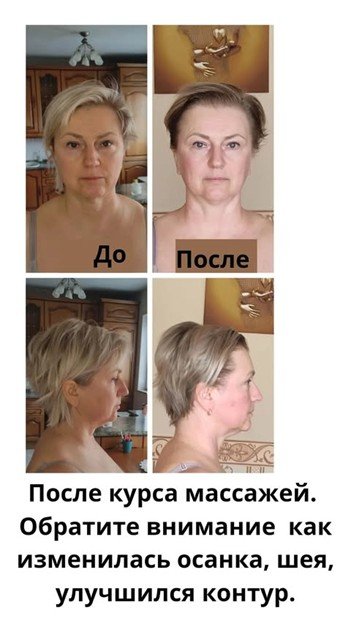
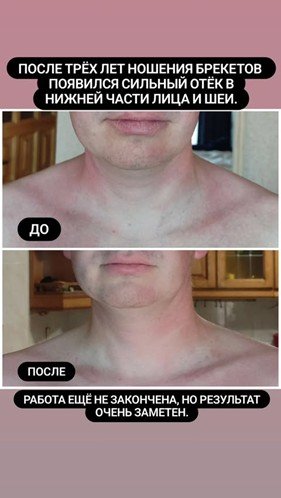
Reviews and before/after